Product Catalogue
High-purity refractory raw materials and finished refractories, supplied worldwide with full technical documentation.
No matching products
Alumina
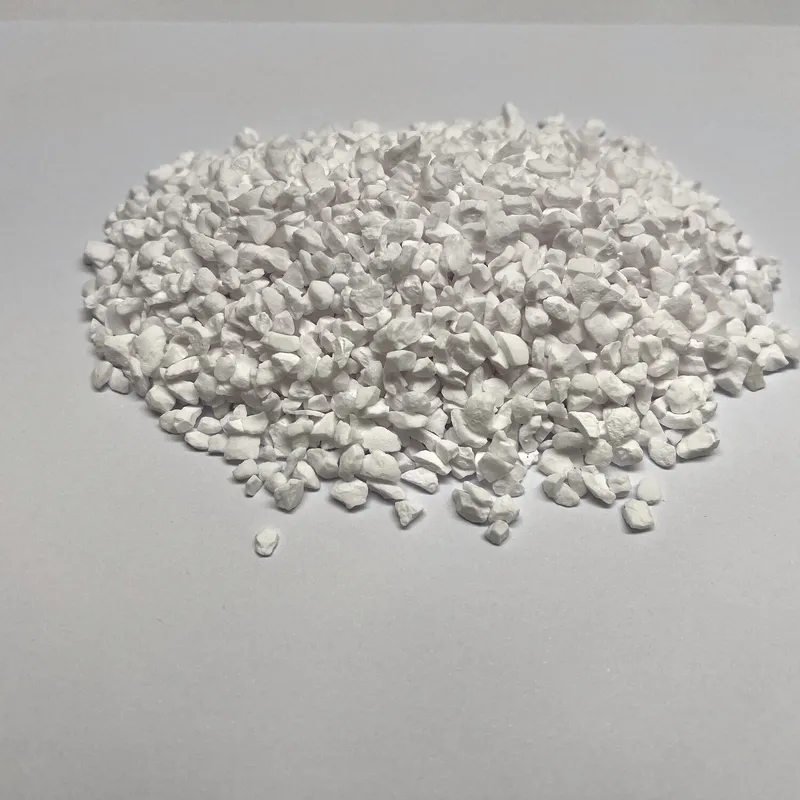
Tabular alumina is a fully sintered, densified alpha alumina produced above 1800 °C without additives. Its coarse hexagonal crystals, very low porosity, outstanding refractoriness and excellent thermal-shock resistance make it the first-choice aggregate for high-performance shaped and monolithic refractories.
Typical Analysis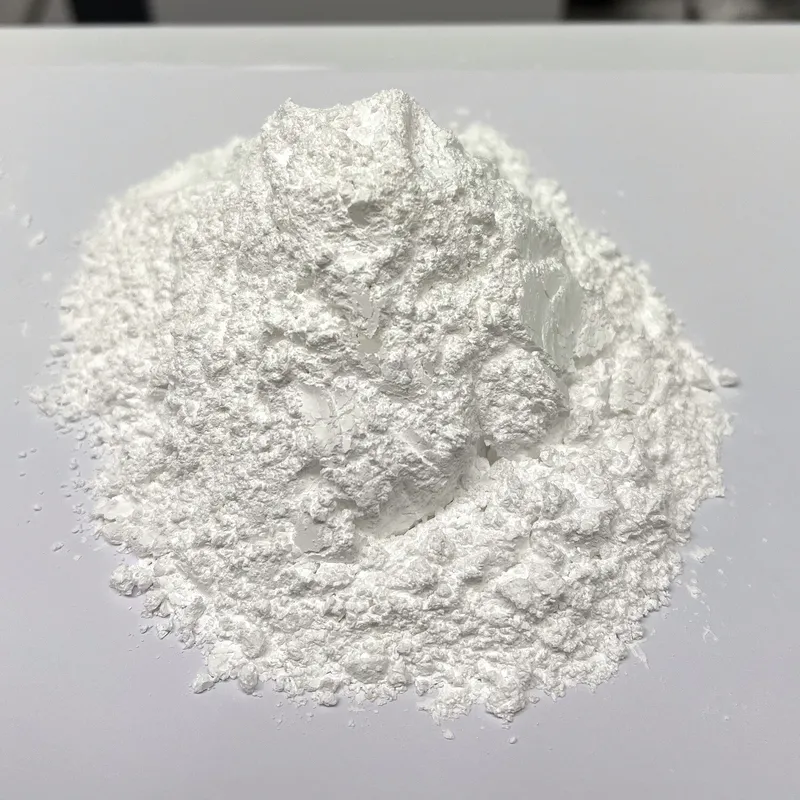
Calcined alumina is produced by calcining alumina at controlled temperatures to convert it into the stable alpha phase (5–100 %). With high purity, high thermal conductivity and refractoriness, dimensional stability and excellent abrasion resistance, it is supplied in a range of grain sizes and soda contents.
Typical AnalysisReactive alumina has a very fine particle size and high specific surface area, acting as the matrix component of shaped and unshaped refractories. Low open porosity, excellent sintering reactivity, high purity and reduced water demand optimise the performance of low-cement and cement-free castables.
Typical Analysis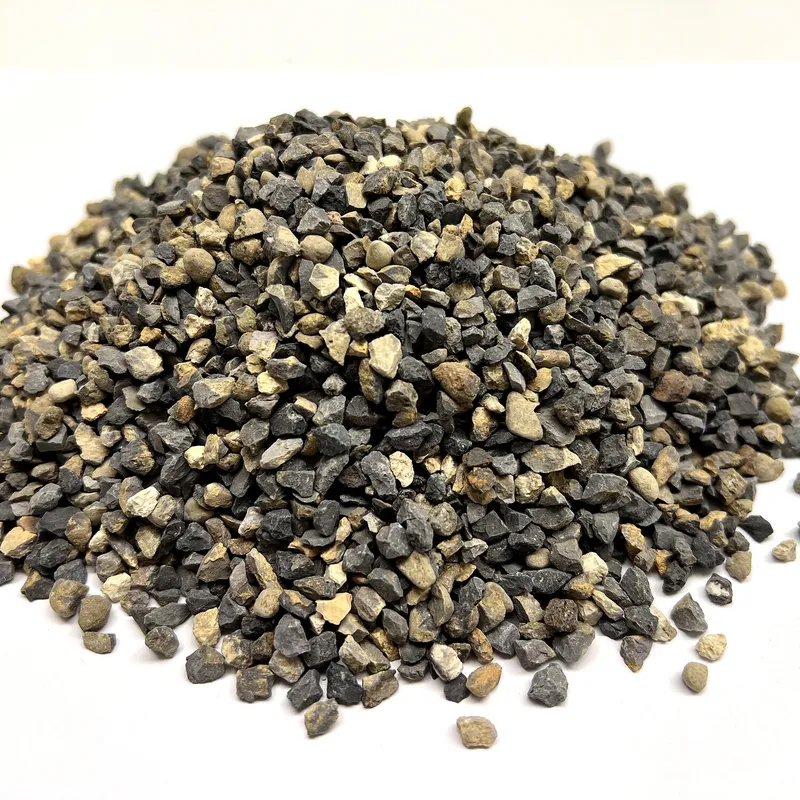
Calcined bauxite is produced by calcining low-iron, low-alkali bauxite at 1600–1800 °C, forming the refractory phases corundum and mullite. With low thermal expansion, excellent creep resistance and good chemical stability, it is among the most important raw materials for refractories in steel, foundry, glass and cement.
Typical Analysis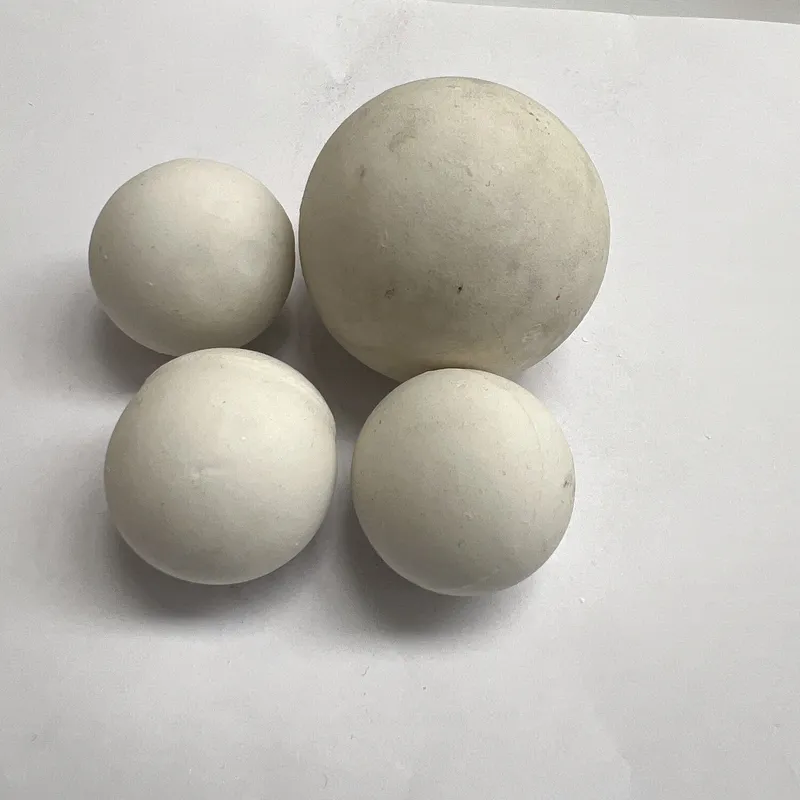
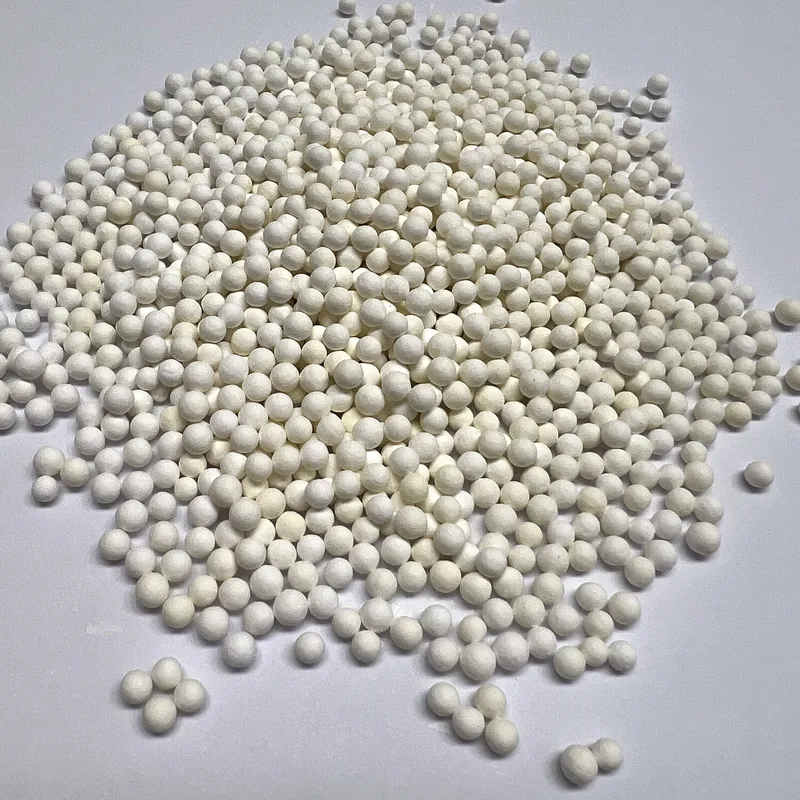
High-density alumina grinding media with a hard, smooth surface and very low wear rate. Because they abrade far less than steel or flint media, they grind ceramic bodies and glazes without discolouring or contaminating the batch.
Typical AnalysisCarbon & Carbide
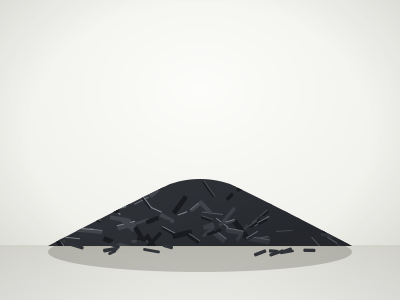
Flake graphite provides excellent thermal conductivity, natural lubricity and outstanding non-wetting behaviour against molten slag and metal. It is the essential carbon source in magnesia-carbon and alumina-carbon refractories, sharply improving thermal-shock and corrosion resistance.
Typical Analysis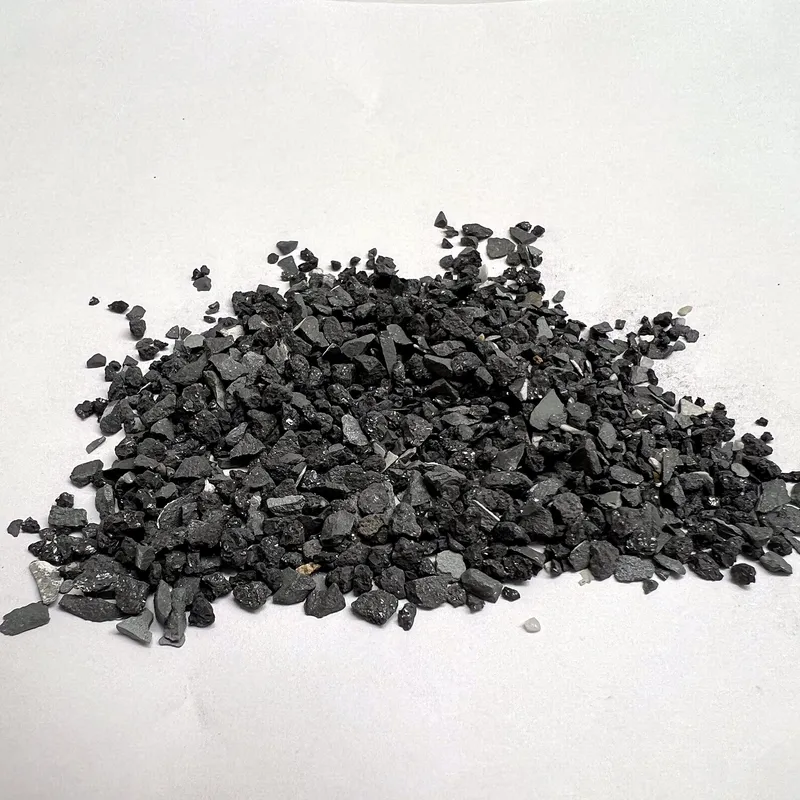
Silicon carbide combines very high hardness, high thermal conductivity, low thermal expansion and strong resistance to oxidation, slag and thermal shock. It is a key additive and aggregate in refractories for blast furnaces, ladles, kilns and incinerators, and is widely used as an abrasive.
Typical Analysis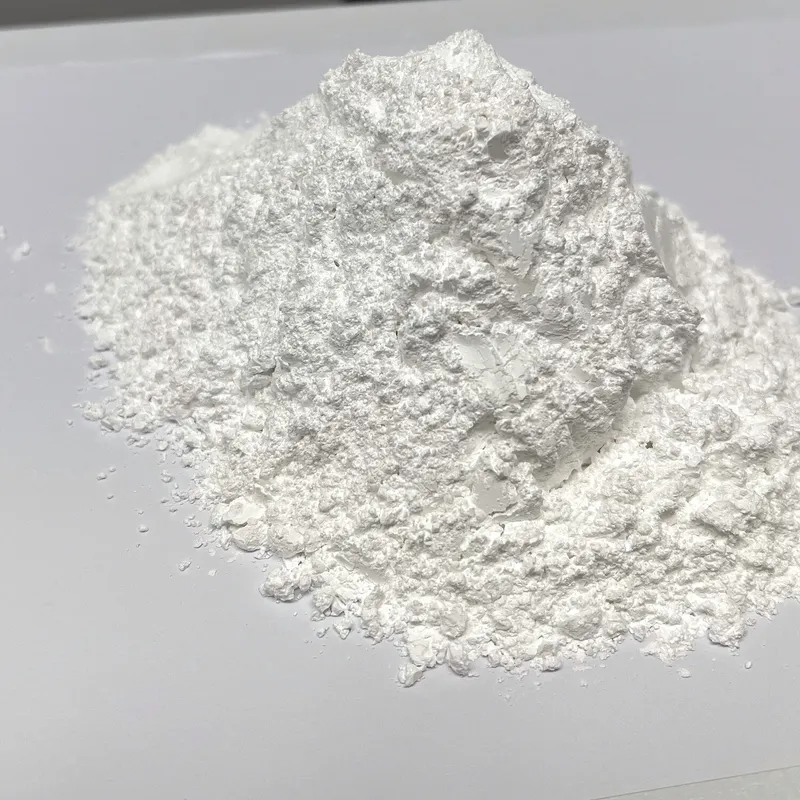
Zirconium
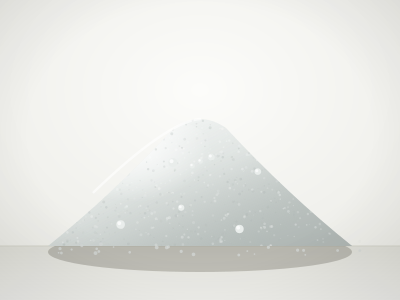
Zircon offers high refractoriness, very low thermal expansion, excellent resistance to molten metal and slag, and high opacity. It is widely used in glass-furnace refractories, foundry moulding and as an opacifier in ceramic glazes and porcelain bodies.
Typical Analysis
Zirconium oxide offers very high thermal and chemical stability together with outstanding toughness and refractoriness, and is used in advanced technical ceramics and specialist refractories.
Typical Analysis
Shaped & Monolithic Refractories
Monolithic refractory concretes mixed with water on site and installed by casting, shotcreting or gunning. Because they cure into a joint-free lining, they close the seams through which slag and melt would otherwise penetrate, and they suit complex geometries that brickwork cannot follow.
Typical Analysis
Lightweight, highly porous firebricks in which the trapped porosity — normally a defect — is the working principle: it blocks heat flow. Used as the back-up layer behind the hot face, they cut shell losses and fuel consumption, and their low thermal mass lets a furnace heat and cool quickly.
Typical Analysis
Factory-fired shaped refractories with consistent, verified properties. Because the quality is set in the plant rather than on site, they are the safer choice for the highest-wear zones — slag lines and hot faces — where field-installed monolithics are harder to control.
Typical Analysis
Deflocculants, setting regulators and microfillers dosed in small amounts to control how a castable behaves. They let a mix stay workable at low water content — the single most effective lever on final density, strength and refractoriness.
Typical AnalysisMagnesia

High-purity white fused magnesia with a high MgO content and coarse periclase crystals. It is the base raw material for magnesia refractories and magnesia-carbon bricks, offering excellent resistance to slag attack.
Typical Analysis
Brown fused magnesia combines high density with good thermal resistance, and is used in basic refractories and demanding industrial applications.
Typical Analysis
Dead burned magnesia is produced by sintering magnesite at high temperature to yield a dense, stable periclase structure. Its high refractoriness and strong resistance to basic slags make it the backbone raw material for basic refractories in steelmaking and cement kilns.
Typical Analysis
Alumina-magnesia spinel (MgAl₂O₄) offers outstanding resistance to slag penetration and thermal shock, and is a key component of steel-ladle refractories and spinel castables.
Typical AnalysisSands & Clays
Sillimanite is a leading raw material for high-alumina refractories and 55–60 % alumina bricks, and an important input to the china and ceramic industries. It converts to mullite and a glassy phase at around 1250 °C and has a melting point of approximately 1850 °C.
Typical Analysis
Chamotte, or calcined fireclay, is produced by calcining refractory clay and serves as the structural aggregate of fireclay bricks and castables. It is supplied in a range of alumina grades (CS and CT series).
Typical Analysis
Kaolin combines high whiteness with high purity and is the principal raw material for bodies and glazes in the ceramic, china and porcelain industries, as well as for refractory applications.
Typical Analysis
Ball clay is a highly plastic clay with excellent green strength, used to improve the workability and unfired strength of ceramic and china bodies.
Typical Analysis
Chromite ore with a high chromium oxide content is a raw material for basic refractories, foundry applications and chemical uses.
Typical Analysis
Foundry moulding sand with high refractoriness, low thermal expansion and good heat conductivity. It chills the casting skin and resists metal penetration, so it is used in the hottest parts of the mould where silica sand would fuse or expand out of tolerance.
Typical Analysis
Free-flowing filler that keeps the ladle nozzle sealed while the heat is treated, then runs out on its own when the gate opens. Its whole value lies in that moment: a sand that sinters into a crust forces oxygen lancing, which costs time, damages the nozzle and contaminates the steel.
Typical Analysis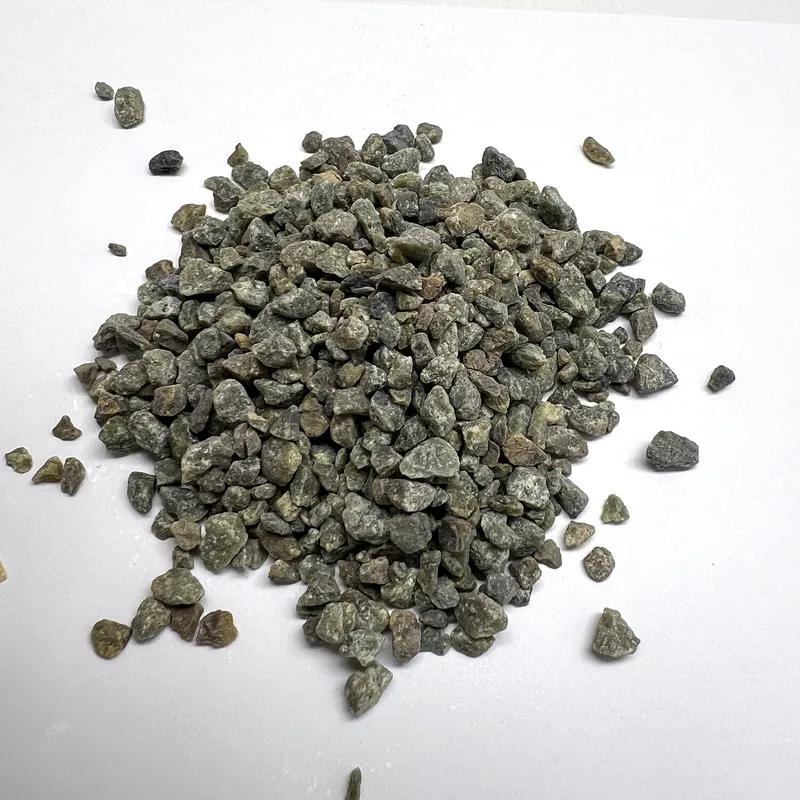
Magnesium-iron silicate filler for the eccentric bottom tapping hole of an electric arc furnace. It must hold back the melt through the whole heat and then run out freely on tapping — and unlike chromite-based fillers it contains no chromium, avoiding the hexavalent-chromium question in spent material.
Typical Analysis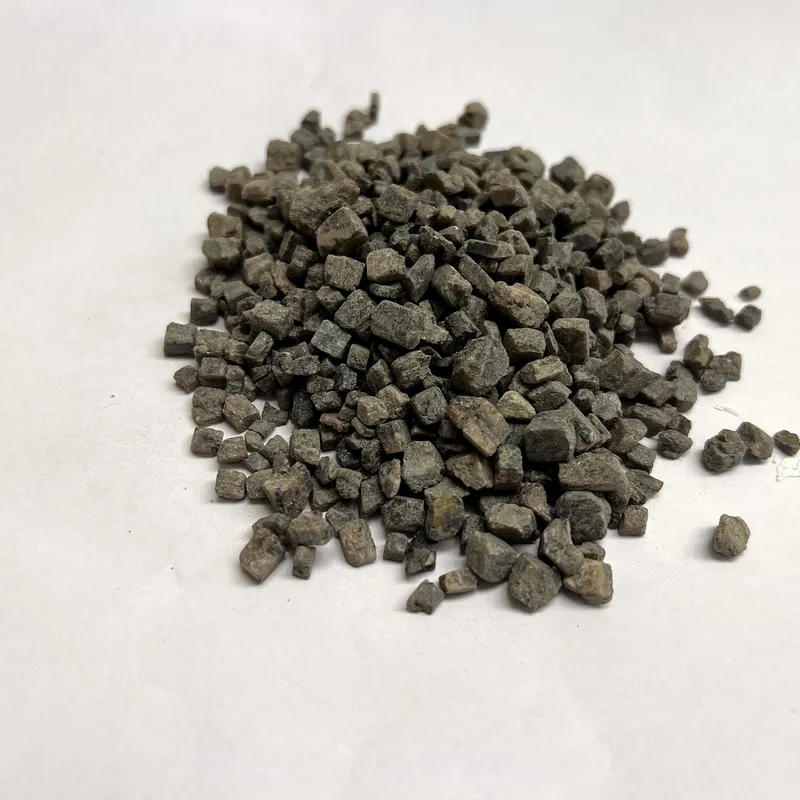
Andalusite is one of the three crystalline forms of aluminium silicate (Al₂SiO₅) in the sillimanite group and a premium raw material for high-alumina refractories. On heating it converts gradually — without sudden decomposition — into mullite and a glassy phase, and this controlled mullitisation with minimal volume expansion delivers excellent thermal-shock resistance, creep resistance and dimensional stability at high temperature.
Typical Analysis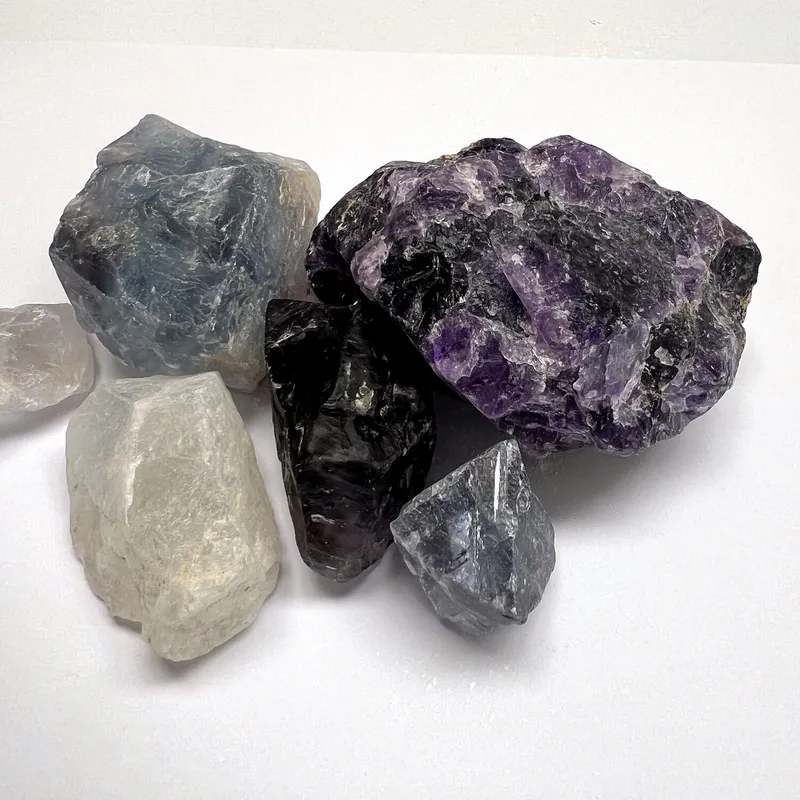

Ladle & Furnace Bricks

Pressed brick of fused magnesia and high-purity flake graphite in a phenolic resin bond. The graphite is what makes it work: slag does not wet carbon, so it cannot creep into the pores, while the high conductivity of graphite spreads heat and blunts thermal shock. Antioxidants protect the carbon from burning out.

Pressed resin-bonded brick combining bauxite, magnesia and tabular corundum. The magnesia reacts in service to form spinel in situ, which closes porosity and resists slag, while the alumina skeleton keeps expansion moderate — a balance that suits ladle walls and bottoms better than a purely magnesian brick.
Carbon-free pressed brick of corundum and spinel. Because it contains no graphite it cannot carburise the bath, which makes it the correct choice for low-carbon grades where an MgO-C lining would put carbon back into steel that has just been decarburised.

Magnesia brick with a deliberate free-lime content. The CaO is not an impurity here but the working principle: it reacts with alumina and silica inclusions in the melt and takes them into the slag, so the lining actively cleans the steel instead of merely resisting it.
Pressed magnesia brick bonded with chrome spinel, giving very high slag corrosion resistance and hot strength together. It holds up where a purely magnesian brick would be attacked — AOD and VOD vessels and non-ferrous smelting, where fayalitic slag and matte penetrate readily.
Corundum and tabular-alumina brick made entirely without carbon, for ultra-low-carbon steels where even trace pick-up from the lining is out of specification. It combines high corrosion resistance with good thermal shock behaviour despite carrying no graphite.
Flow Control
Fired refractory plate that meters the steel stream in a ladle slide gate. Firing at medium-to-high temperature gives it very low volume change in service, which is what keeps the sealing faces flat: a plate that moves dimensionally leaks, and a leaking gate ends the cast.
Resin-bonded plate cured rather than fired, with antioxidants protecting the bond. Skipping the firing step lowers both cost and the energy and emissions behind it, which suits small and medium ladles where the duty is less severe than a large heat.
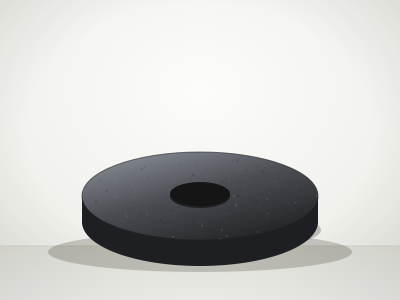
The mechanism that opens, throttles and closes the ladle: a base frame, a sliding section and a spring element that holds the plates together. The spring pressure is the safety-critical part — it keeps the sealing faces closed against ferrostatic head, and correct setting also determines how long the plates and nozzles last.
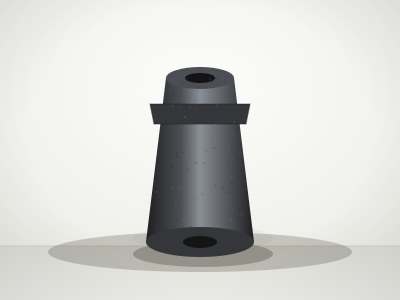
Pressed corundum-bauxite-graphite nozzle fitted below the slide gate, guiding the stream on to the tundish. The graphite content gives it the toughness to survive thermal shock at the moment of opening, when it goes from ambient to steel temperature in seconds.
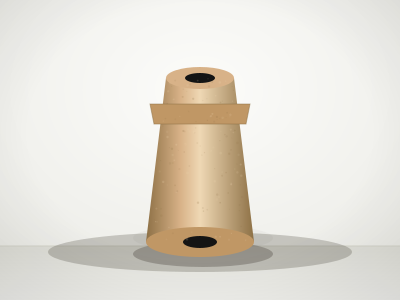
Slip-cast high-purity corundum nozzle for large ladles and long sequences. Slip casting produces a dense, uniform body without pressing seams, which is what lets the bore hold its shape through hours of flow instead of wearing open and losing stream control.

Cast corundum-spinel block that seats the nozzle in the ladle bottom. It sits at the sharpest temperature gradient in the vessel — steel on one face, cooling shell on the other — so its value lies in staying dimensionally stable there rather than cracking and loosening the nozzle seat.

Pressed corundum well block, the higher-density alternative to the cast version. Mechanical pressing closes porosity further, so it resists penetration and erosion at the nozzle seat while holding its dimensions through the severe thermal gradient of the ladle bottom.
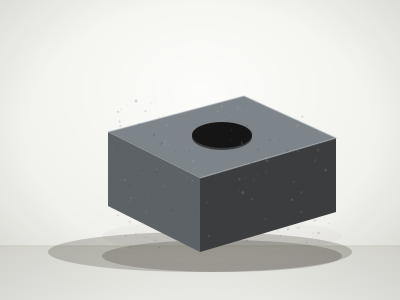
Chrome-alumina plug with controlled porosity that injects argon into the ladle to stir and homogenise the bath. The porosity has to be engineered, not incidental: too tight and the gas will not pass, too open and steel infiltrates and the plug fails — with a safety margin that matters because it sits in the ladle bottom.

High-purity alumina-carbon briquette used to bed and seal the joints between nozzles and slide gate components. It spreads evenly and develops enough bond strength to hold the seal, closing the gaps through which air would otherwise be drawn in and reoxidise the steel.
Tundish Refractories
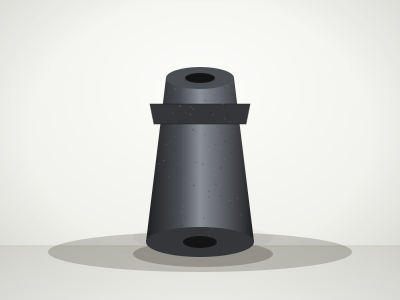
Tube that encloses the stream between ladle and tundish so it never meets open air. Without it the falling steel reoxidises and picks up alumina inclusions that later clog the nozzles, so the shroud protects casting quality as much as it prevents splashing.
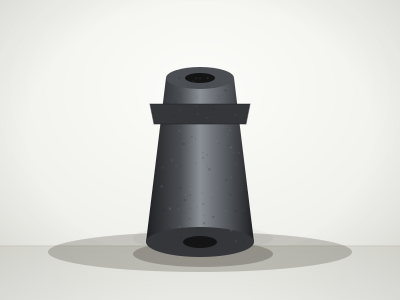
Nozzle that carries the steel from tundish into the mould below the meniscus, so the stream never touches air. Its bore shape sets the flow pattern and heat distribution inside the mould, which in turn governs shell growth and surface quality; the slag line usually carries a zirconia insert because that band erodes fastest.
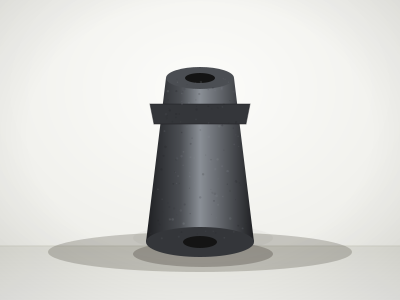
Alumina-carbon or magnesia-carbon rod that throttles the tundish outlet by varying its gap above the nozzle. It is the finest flow control in the casting train — raising or lowering it by a millimetre changes the stream — and its grade is matched to the steel being cast.
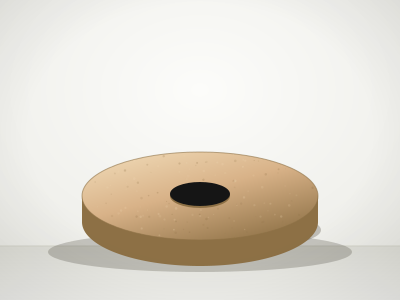
Dense plate controlling the tundish outlet as an alternative to a stopper rod. Because a tundish runs for a whole casting sequence rather than a single heat, plate life is the binding constraint: it must hold corrosion, abrasion and thermal shock for hours without losing the flatness that seals it.
Nozzle set into the tundish bottom block, working against the stopper rod. Its defining property is anti-clogging behaviour: alumina inclusions from aluminium-killed steel build up on the bore and choke the stream, so the material and bore finish are chosen to resist that deposit.
Tundish nozzle carrying a zirconia insert exactly where the stopper rod meets the bore. That contact point wears fastest and, once it opens up, fine flow control is lost for the rest of the sequence — the insert is what keeps the throttle accurate through a long cast.
Zirconia nozzle that sets the casting rate by a fixed bore diameter instead of a moving throttle, letting several strands run in parallel on one machine. Everything depends on the bore holding its size, so the thermal expansion coefficient of the material is the critical parameter.

Impact pads, weirs and dams, flow stabilisers, corner guards and bottom blocks. These are what turn a tundish from a buffer into a refining vessel: by lengthening and steadying the flow path they raise residence time, giving inclusions the chance to float out before the steel reaches the mould.
Steel Castables & Mortars
Magnesia or forsterite mix rammed in dry and sintered by the first heat. Because no water is added there is no dry-out curve to wait through and no steam-explosion risk, so a tundish can be relined and returned to service far faster than with a cast lining.

High-purity magnesia and olivine mix applied by trowel as a sacrificial tundish lining. It is formulated to strip away cleanly at the end of a sequence, which is what makes a fast turnaround possible, and it contributes no contamination to the steel while in service.
Low-cement castable for the permanent layers of tundishes and ladles. Grading is the production lever here: the particle size distribution is tuned so the mix packs densely at low water content, which is what delivers resistance to thermal shock, spalling and abrasion in service.
Corundum-spinel castable with micronised fillers that flows into place under its own weight, with no vibration. That matters where a vibrator cannot reach — around well blocks, cooling pipes and complex shapes — and it fills them without the voids that vibrating from outside would leave.

Corundum-magnesia-spinel mix sprayed onto hot or cold ladle linings for local repair. Its formulation targets low rebound — material that bounces off is money on the floor and a thinner patch — and high adhesion, so a worn area can be built back up during a short stoppage.

Chrome-corundum mortar for bedding and jointing refractory brickwork. Its plasticity and adhesion are what let joints be laid thin and even, and a thin joint matters: every seam is a potential path for slag to penetrate behind the working face.
Corundum, high-alumina and zirconia-based jointing compounds for sealing nozzles and flow-control components. Excellent plasticity lets them be worked into irregular gaps and hold there, closing the air paths that would otherwise reoxidise the steel passing through.